Preface from the original site
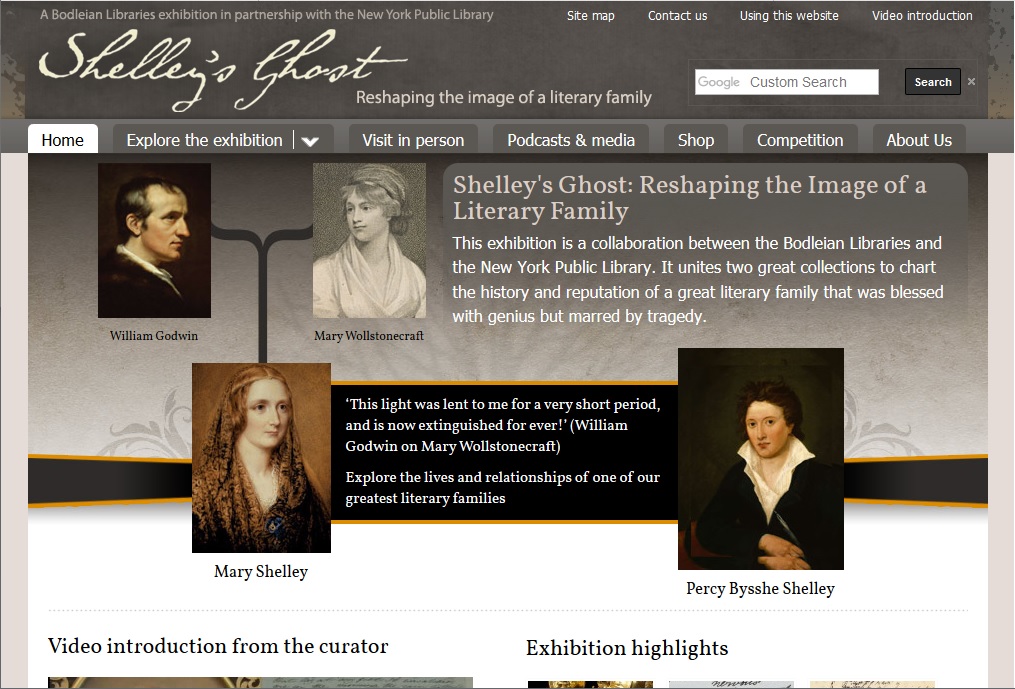
This exhibition is a collaboration between the Bodleian Libraries and the New York Public Library. It unites two great collections to chart the history and reputation of a great literary family that was blessed with genius but marred by tragedy.
What is the exhibition about?
Few families enjoy such a remarkable reputation for their contribution to the literature and intellectual life of Britain as the Godwins and the Shelleys. Shelley's Ghost: Reshaping the Image of a Literary Family explores how the reputation of this great literary family was shaped by the selective release of documents and manuscripts into the public domain. It also provides a fascinating insight into the real lives of a family that was blessed with genius but marred by tragedy.
Last update to original site:
2012
Date when website was withdrawn:
15 April 2020